Shackleton Leadership Experience

Shackleton Leadership Experience

Overview:  Why the Shackleton Leadership Experience
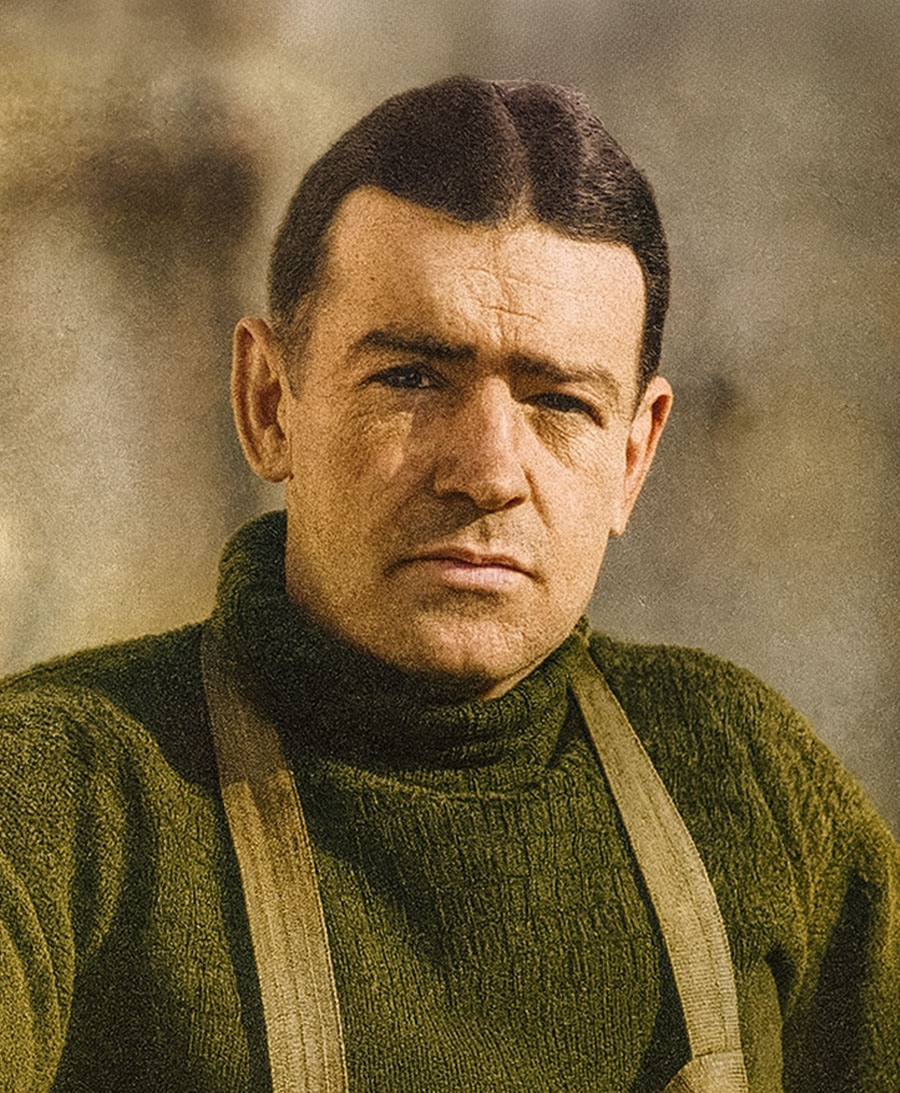
The Shackleton Leadership Experience is based on the harrowing and inspirational 22-month Antarctic voyage of Sir Ernest Shackleton and 27 men under his command aboard the Endurance from 1914-1916.  Trapped in ice before reaching his team’s destination of the South Pole, facing dwindling supplies and with no means of communication to potential rescuers, Shackleton was faced with daily crises and life-and-death decisions. 

Shackleton Leadership Experience

Saga Provides Platform to Discuss the Character of Effective Leadership in Times of Crisis - This richly detailed and epic event provides a compelling case study from which to explore Shackleton’s highly adaptive leadership style.  The program provides insights and principles for leaders managing through crises, and shows how leaders can become highly effective and even “beloved” leaders – leaving behind a rich leadership legacy as Shackleton did.

Like the Apollo 13 saga that came decades after it, this story is regarded as one of the world’s most “successful failures” and one of the truly great examples of leadership, as well as both moral and physical courage.  A key take away from the Shackleton saga is that leaders do make a difference—a critical difference.

Exceptional leaders inspire a level of teamwork and unity that can mean the difference between success and failure in both turbulent and calmer times.  In a harsh business environment, it may not be a matter of life or death, but a lack of leadership can spell disaster for an organization. 

This classroom program explores the many things that Shackleton did well, and not so well, to lead his men back to safety.  Most importantly, it explores the many vital, critical and important things that today’s leaders must do to keep their organizations not just surviving but thriving by continuing to daily win the hearts and minds of those they lead during turbulent and calmer times alike.

Shackleton Leadership Experience

Methodology and Delivery
Using case studies and a variety of multi-media resources to capture the essence of the Endurance Expedition, this classroom program provides relevant and practical knowledge and skills that that can be brought back to the workplace to achieve a winning edge in the market by building a winning culture within the organization.  The program is highly inspirational, fast paced and interactive.  Several leadership “tools” are provided during the session and attendees work though several exercises intended to maximize learning.  Participants develop their won 30-day “Shackleton Action Plan” to ensure transfer of knowledge and skills back to the job.

Leadership Elements Explored and Discussed
This epic saga of survival provides a myriad of leadership elements for exploration and discussion, including how to:

  • Break clear of the past and focus on the present and future
  • Capitalize on change to take advantage of new opportunities
  • Create and communicate a clear vision for everyone to connect to and move forward
  • Keep focus on the “big picture”
  • Make better and faster decisions while avoiding “decision traps”
  • Mitigate risks in a fluid environment
  • Innovate and improvise when new solutions are required
  • Build trust at all levels
  • Cultivate a sense of compassion and responsibility for others
  • Develop leaders for the future
  • Lead with “emotional intelligence”
  • Hire the right people for the organization
  • Play to the strengths of each individual
  • Choose  the right team leaders and determine the best composition of teams
  • Create high levels of morale
  • Energize others with positive energy, persistence and “smart” optimism
  • Play your part to promote an “upbeat” environment for others to work in
  • Lead by example and  with visibility
  • Communicate strategically
  • Compete with others respectfully
  • Re-recruit pivotal talent
  • Become an inspiring leader

Shackleton Leadership Experience

Benefits
This inspiring leadership development program is sure to offer participants new perspectives on leading and motivating others during both difficult and calmer times.  The results are clearer vision for the organization, better and quicker decision making, greater unity and teamwork, higher levels of trust, better morale, and commitment instead of compliance – all having a positive impact on the attraction, development and retention of top talent and the achievement of business results.

Additional benefits include:

  • Greater Team Cohesion -- In addition to gaining these benefits and experiencing new perspectives on leadership, group participants will also derive a greater esprit de corps.  When intact teams participate together and share a common experience, the result is highly impactful and can contribute greatly to achieving organizational alignment. 
  • Tailored Customization -- An important benefit to participants and organizations alike is when we customize the content of a program and/or place emphasis on a leadership aspect that has been deemed critical to the participating organization.  By gathering information from pre-session interviews or teleconferences with program sponsors and/or HR leaders, we can focus in on specific events, characters and dynamics of the battle and its leaders to make the program highly relevant and situational to all participants and the needs of that organization.  Additionally, our battlefield programs can be modified to use and integrate a company’s respective core competencies and leadership models. Further, program agendas can be adjusted to meet specific time constraints and desires of the participant companies. 

Who Should Attend
The program helps shape the mindset and sharpens the skill sets of experienced leaders who are in the very midst of leading their teams through challenging environments.  It can be tailored to meet the needs of middle, senior and executive audiences and can be delivered in small or large group settings.  This program may also be adapted to meet the needs of newly appointed and even less experienced managers who would benefit from hitting the ground running successfully at this early “turn” in their careers. 

Additional
On December 5, 1914, Sir Ernest H. Shackleton and 27 men under his command sailed from South Georgia Island in the South Atlantic aboard the ship Endurance. Since the South Pole had been reached a few years earlier by other polar explorers, Shackleton’s goal was to be the first to traverse the continent by foot.

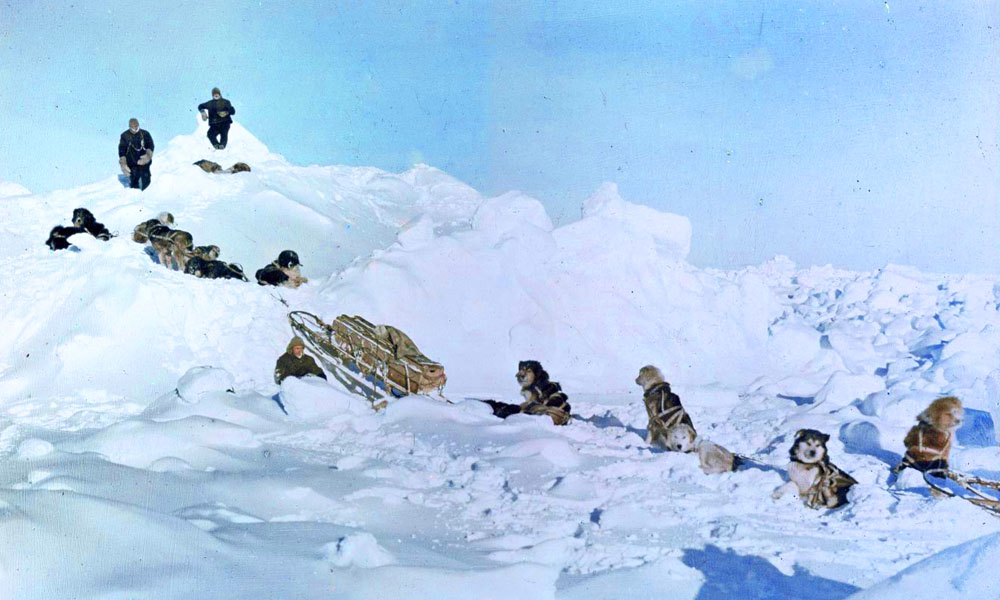
In January 1915, with Antarctica far off in the distance but in view, the Endurance became trapped in a sea of ice. For nine months, the ship and the men lay stranded in the frozen mass. Then in October 1915, the unthinkable happened:  the Endurance was crushed by sheets of heavy ice, and Shackleton and his crew were forced off the ship.  With his men's survival, not Antarctica, as his new goal, Shackleton began to focus his every effort on getting everyone back alive. The men salvaged what they could and camped on the surrounding ice flows for several months, surviving mostly on seals and penguins and sleeping on the cold wet ice and enduring unrelenting subzero temperatures.

In April of 1916, when the ice began to break up, Shackleton and his men set out in three life boats to find a distant island where whalers might be their only hope of rescue.  Upon landing on their only option - Elephant Island, after nearly 15 months at sea, the men were relieved to be on dry land.  However, Shackleton knew that this island offered no hope of rescue as whalers traditionally avoided it due to its uninhabitable topography.  In an act of true courage, Shackleton and five carefully selected members of the crew set out in one of the lifeboats on a heroic eight-hundred mile journey across the most treacherous seas known to the planet, to find South Georgia Island and seek help.

Miraculously, the six men found South Georgia but met many more obstacles upon reaching the island.  Four months later on August 31, 1916, 22 months since the launch of the expedition, Shackleton secured a loaner ship and guided it to Elephant Island to rescue the 22 men he left behind.

Unlike most of the other polar expeditions of similar travail, every man survived – not only in fairly good health, but also in good spirits – all due to the leadership skills of the leader.


Testimonials

There is no better feeling for a champion of corporate learning than when a creative leadership development program makes an important difference for the organization AND wins over the skeptics. Battlefield Leadership is such a success story for General Mills. We first used Cole and Rich for one of our major division leadership teams. While some leaders were excited to use history and battles as a learning tool, others here weren’t so sure. But history came alive for all members of the team that week and it made a powerful impact on individuals and the working team. Since then numerous teams have sought out the Battlefield experience and we have an ongoing demand for this offering. I can highly recommend this program and also greatly value the partnership with the principal consultants.

Kevin D. Wilde 
VP, Organization Effectiveness and Chief Learning Officer
General Mills, Inc.

The appeal of the Gettysburg Leadership Program is truly universal.  Our global senior management team which comprises more than a dozen nationalities rated this the best and most relevant leadership course they have experienced.

The Gettysburg Leadership Program successfully enabled our global management team to better appreciate strategy versus tactics as well as examine their teams’ alignment on strategic goals.

The fantastic feedback from our global management team demonstrated the learnings available from the Gettysburg Leadership Program transcend time and nationalities.  The participants universally appreciated the experience and how applicable the lessons are for them. 

Robert Amen 
Chairman and CEO
International Flavors & Fragrances Inc.

Experiential education and team-building at its best, the Gettysburg Experience is a transformational undertaking for leaders at any level in any organization, and especially for leadership teams. By walking the historic battles of Gettysburg and deconstructing the decisions made under fire, the relationships between leaders and subordinates, and the examples of inspired vs. confused communication, the Battlefield Leadership facilitators bring historic moments to life and make it extraordinarily relevant to the "battles" modern leaders fight every day.

Patrick F. Bassett
President
National Association of Independent Schools