
Battle of the Bulge Leadership Experience

Battle

Overview:  Why the Battle of the Bulge

The Battle of the Bulge Leadership Training Experience uses this monumental and pivotal battle – the largest single battle in the history of the United States Army – as a vehicle to examine how leaders of large and complex organizations addressed extraordinary and unforeseen challenges to achieve their individual group and larger organization objectives.  It also provides an immensely rich platform from which to explore leadership decisions both from a highly proactive/offensive position and from a defensive position during times of extreme desperation.  The outcome of the German surprise attack in mid-December 1944 in Belgium and Luxembourg shaped not only our nation’s history but also the course of world history.

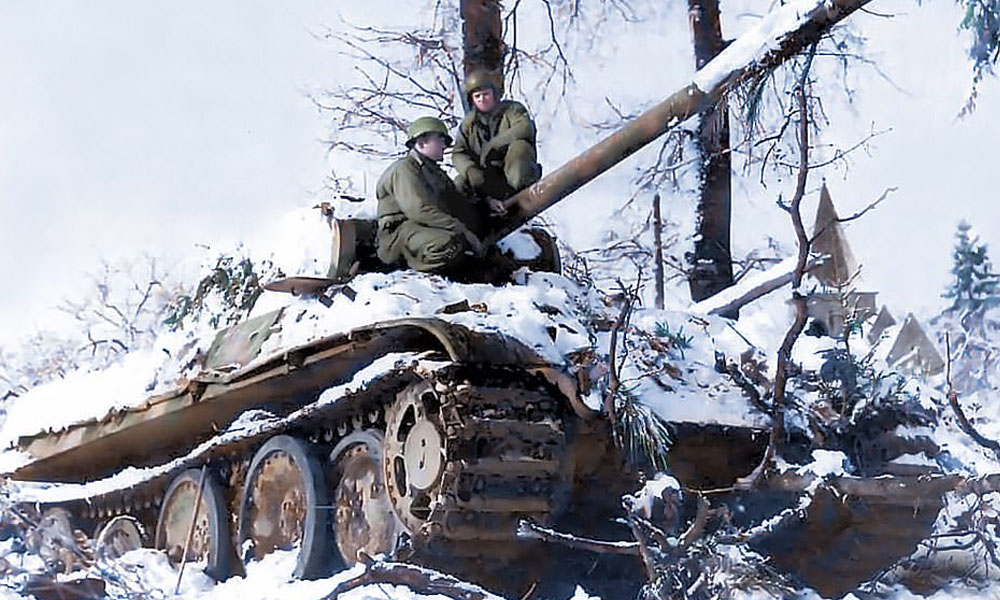
  • Well Documented Battle That Brings The Event to Life – The battlefields of Belgium and Luxembourg serve as the ideal venue for our purposes because the scenic terrain on which the battle was fought has changed little in the decades since it occurred.  The incredible beauty of these parts of Belgium and Luxembourg vividly highlights the unique challenges faced by the German attackers and American defenders.  Abandoned or destroyed tanks, artillery pieces and battle-damaged buildings are still to be found as they were when the fighting stopped and they stand in mute testimony to the ferocity of the struggle.  The densely forested Ardennes region reveals why Nazi Dictator Adolf Hitler chose this area to launch his surprise attack and how difficult it was for General Dwight D. Eisenhower to react quickly to the unexpected onslaught.  In the midst of a harsh December in an unforgiving environment, the Germans attacked straight into the weakest part of the American-held front then closing inexorably in on Nazi Germany.  Contrary to previous optimistic expectations, the war would definitely not be over by Christmas.  Initially outnumbered, many of the American troops were inexperienced and caught off guard; the fate of the entire allied coalition hung in the balance.  On both sides, leadership at every level contributed to the final outcome.
  • Dynamic Battle That Enables Rich Leadership Exploration – The Battle of the Bulge provides a unique opportunity to examine leadership and its consequences in depth.  Whether it was at the highest level involving the direction of tens of thousands of individuals or at the junior level involving only a handful of people, what comes through consistently is the huge difference effective leadership can make in organizational effectiveness.  On the German side, this battle represents the last gasp, the ultimate gamble to retrieve victory from impending defeat, a herculean effort to overcome seemingly impossible obstacles when the enemy has seized the initiative.  For the American side, numerous issues resonate with contemporary clarity:  dealing with the unknown or unexpected; creating order out of chaos; empowering subordinates; underestimating the competition; the importance of providing clarity of intent and communication of goals; and empowering subordinates. 

From the top level to the bottom level, leaders modified their tactics to fit unexpected circumstances every day, and this gives us enormous opportunity under differing scenarios to explore that dynamic for learning about leadership.

Battle of Bulge

Leadership Elements Explored and Discussed

The leadership training principles, practices and themes, intrinsically explored via this program include:


  • A leader’s role in creating conditions for success
  • Building and effectively sustaining both leadership teams and teams of leaders
  • Creating order in the chaos of a rapidly changing environment
  • Leveraging the power of technological change
  • Balancing the sense of strategic opportunity with the calculation of immediate tactical risks
  • Filtering and prioritizing critical initiatives from the multiplicity of important tasks
  • Creating an environment fostering initiative and ownership
  • Establishing a leadership cl;imate of commitment and readiness to improve organizational agility
  • Adapting quickly to fluid, volatile environments 
  • Instilling resiliency and flexibility
  • Thinking strategically while focusing tactically
  • Communicating effectively to a geographically dispersed team

Battle of Bulgethodology

Hethodology and Delivery

We typically begin the Battle of the Bulge Leadership Experience with an historical overview and discussion at a charming hotel in the historic Belgian city of Spa.  While there we will conduct a general and strategic overview of the battle and the events leading up to it.  Over the course of the next several days we will travel to the key sites of the battle using the U.S. Army’s “staff ride” approach.  At each stop targeted discussions will address the leadership challenges throughout and the experience will culminate with an after action review.  Among the many important places we will visit some of the most notable ones will be the exact spot where the offensive was launched, the harrowing route followed by the notorious German SS Officer, Joachim Peiper, the site of the infamous “Malmedy Massacre” and the heroic American defensive stand at Bastogne. 


Typical Schedule

Battlefield Leadership is the only executive/leadership development and training company offering an experiential leadership training program based on the epic battle between Allied and German forces in the Ardennes Region on the Belgian-German border in December 1944.

The program focuses on the leadership of these multinational forces during the action on the “north shoulder” of the Bulge and the siege of Bastogne at both the strategic (Hitler-Model-Von Rundstedt and Eisenhower-Montgomery-Patton) and operational/tactical levels. Leadership lessons drawn from the Battle of the Bulge experience highlight such dynamics and practices as: balancing operational and strategic focus; communicating direction and expectations with clarity in an ambiguous and fluid environment; recharging morale and the will to perform under pressure; the role of situational awareness and adaptability in effectiveness; having the right leader(s) for the assignment/situation; avoiding complacency and building performance capability and readiness; forging interdependency and teamwork among units; creating an environment supporting initiative and innovation within the framework of intent; and, the role of character and ethics.

Depending on group size, the program is headquartered near Spa, Belgium on the western edge of the Ardennes, at a luxury resort and country estate sometimes called the "lttle Versailles of the Ardennes”, or in nearby Stavelot, Belgium at a charming family-owned five star resort there. Participants fly into Brussels, Cologne, or Dusseldorf (each approximately 130 km from the site) to arrive in Spa by mid-day of the first day. A five-star dinner follows an afternoon session, during which an introduction, an orientation to the area, and a strategic overview of the Battle of the Bulge will take place.

 Day Two begins along the WW I line of anti-tank obstacles known as “dragons teeth” at the spot where the initial German offensive devastated an unprepared Allied position. The action shifts to the area of the secondary and tertiary German thrusts through the Allied line, where German planning and Allied initiative under pressure created a stalemate in the early going. In the early afternoon, we visit the foxholes where a lone American reconnaissance platoon held their position long enough to delay a German armored column from providing reinforcements and reconnecting with their division, so that the third main point of advance was impossible to complete. The day on the battlefield ends near the place on the heights of the Elsenborn Ridge where Montgomery decides on a spontaneous initiative which changes the direction of the Allied counteroffensive. An after-action-review (AAR) at the manoir provides the backdrop for personal reflection, dinner, and work group assignments for the evening.

Day Three follows the battle for ground along the ridges and valleys of the Fagnes-Eifel area and focuses on the crises of leadership involved in: (1) the annihilation of the 6th US Cavalry due to complacency, lack of situational awareness, and the consciously independent operation of the command without regard for the strategic objective; (2) the absence of ethical and moral standards in the German command leading to the Malmedy Massacre; and (3) the initiative and improvisation of Kampfgruppe Peiper in breaking out of the Allied trap at Trois Ponts. Again a late afternoon AAR precedes a reception and dinner, followed by work group assignments.

Day Four will cover the period of the Siege of Bastogne from December 15, 1944 through January 17, 1945 and will trace the action of Allied forces resisting numerically superior German opposition surrounding Bastogne. The leadership of Generals Eisenhower and Montgomery at the strategic level, McAuliffe and Patton at the operational level, and the tactical genius of Captain Winters of Easy Company, 506th Parachute Infantry in the operations north of Bastogne will stress the importance of initiative and focus in the face of unexpected circumstances, moral courage in doing the right thing for the larger organization in the face of risk to the smaller unit, and having confidence, perseverance and determination, as well as clarity in direction and expectation, in the face of overwhelming odds. A lunch and final AAR will close the program, and participants will be ready to depart from Spa in the mid to late afternoon or to remain for relaxation and a later dinner with departure the early morning of Day Five.


Battle of Bulge

The Benefits

Through our exploration of the battle, participants of the Battle of the Bulge Leadership Training Experience will take away a number of benefits.  Rich in executive training and character-based leadership, this leadership lesson from history provides participants further insights into:

  • The role of the leaders in shaping the future
  • Building and sustaining teams
  • Managing processes
  • Nurturing learning
  • Managing order through chaos
  • Effectively communicating and understanding intent, setting clear direction and expectations, and achieving organizational alignment
  • Effectively communicating and motivating personnel across multiple language and cultural barriers

Additional benefits include:

  • Greater Team Cohesion -- In addition to gaining these benefits and experiencing new perspectives on leadership, group participants will also derive a greater esprit de corps.  When intact teams participate together and share a common experience, the result is highly impactful and can contribute greatly to achieving organizational alignment. 
  • Tailored Customization -- An important benefit to participants and organizations alike is when we customize the content of a program and/or place emphasis on a leadership aspect that has been deemed critical to the participating organization.  By gathering information from pre-session interviews or teleconferences with program sponsors and/or HR leaders, we can focus in on specific events, characters and dynamics of the battle and its leaders to make the program highly relevant and situational to all participants and the needs of that organization.  Additionally, our battlefield programs can be modified to use and integrate a company’s respective core competencies and leadership models. Further, program agendas can be adjusted to meet specific time constraints and desires of the participant companies.

Battle of Bulge

Who Should Attend?

The character-based leadership training principles presented through The Battle of the Bulge Leadership Training Experience can be tailored to meet the needs of the highest level senior leaders, the less-experienced yet rising leaders within an organization, or any level in between.  The Battle of the Bulge Leadership program addresses universal leadership themes that leaders at all stages of professional development will find beneficial to their career growth and organizational aspirations.

Additional

The Battle of the Bulge was a massive, complex operation that brought to bear the full spectrum of tactical capabilities in both armies, stretching leaders to their utmost limits. In a vivid way it spatially illustrates the intricate and complicated nature of the challenge of orchestrating different units and resources under separate commands for the combined benefit of entire armies. It depicts unmistakably the critical importance of an efficient and integrated supply chain to organizational functionality.  Because of its many contributing parts there are numerous useful and relevant leadership, decision-making, management, supply chain, and organizational functionality themes to address.  The documentation is extensive, the objectives are clear, and the sites necessary for in-depth analysis are not only beautiful, more importantly, they are easily accessible.  Few of the notable battlefields from history satisfy these criteria so well.

The high stakes of the battle, the drama of its conduct, and the central location in Europe provide provocative insights and great inspiration.  The efforts of two massive armies play out as more than a simple narrative.  On both sides incredible determination and will by leaders at all levels attempt to turn the tide in their favor.  An American army liberating Europe from the clutches of an evil regime is surprised and initially humbled while an experienced but desperate army fights a last-ditch effort to prevent its ultimate destruction.  At all stages actions of determined leaders evoke questions and powerful emotion.  Self-sacrifice is common throughout.  As we try to transcend obstacles in our daily work, the battlefield lessons put our problems in perspective and offer valuable clues as to how we can improve our contemporary effectiveness as leaders and members of leadership teams.

Recommended reading prior to the session is Charles B. MacDonald’s best-selling book, A Time for Trumpets. 


Testimonials

Just a note to more formally express my deep appreciation conveyed to you yesterday for making my "Gettysburg experience" so memorable! Your leadership and history "lessons" have been the best I have ever experienced!

G. Michael Escoe
Vice-President of Marketing, North America
Equant

“Your Normandy program was a great experience and the entire team came home energized and eager to apply the focused insights we picked up in Normandy to the business and their own lives, . We definitely came back as better leaders!!!!! I was impressed how well the program appealed to and affected all the different nationalities in a team as diverse as mine.  I genuinely believe the Normandy experience has provided important areas for improvement in effectiveness and a strong motivation boost for my team.”

Luis Merizalde
President
General Mills, EMEA Region


We are determined not to let the lessons we learned at Gettysburg go to waste. So I have dedicated two hours every month for leadership training. I've assigned each of my managers a month to run a session. Focus of each session is to make us better leaders individually and as a team by learning from each other.

Michael Hobbs
Vice President Custom Services & Development
Novation